

Travel and Arrival
Soroya has been defined as one of the most beautiful Islands in Norway. It is situated in the far north of the country, a short 20 minute ferry trip from Hammerfest.
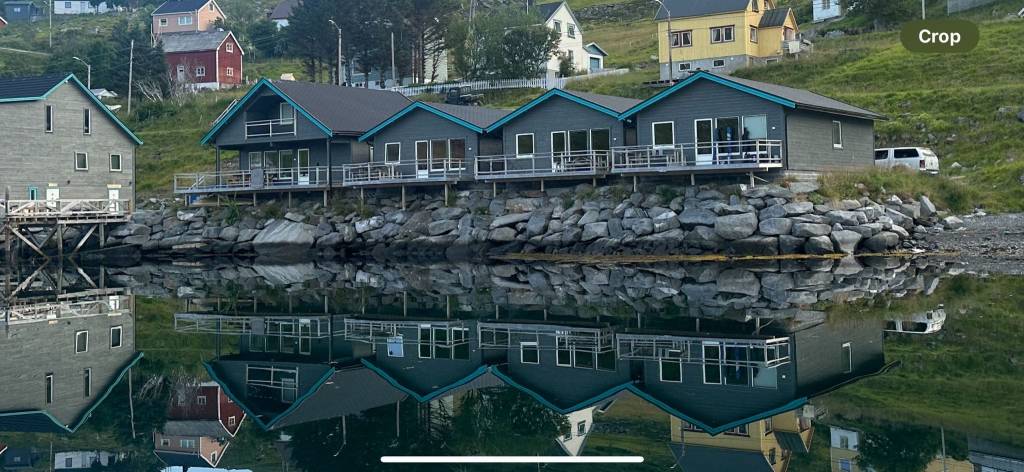
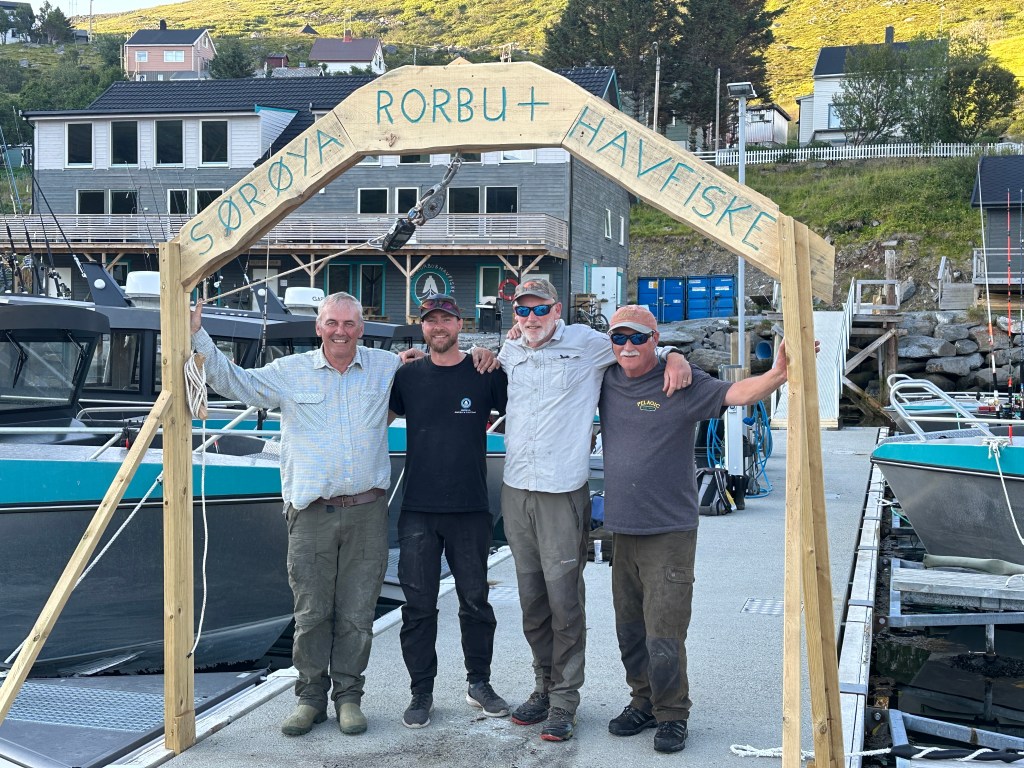
Based in Akkarfjord, is the fishing camp “Soroya Rorbuer og Havfiske“. This is a modern fishing camp with various accommodation options and high quality boats to rent. It also has a filleting room with freezers and a tackle shop onsite. A small supermarket is situation 200 metres from the camp.
From a fishing perspective, Soroya is one of the top locations in the world for big Halibut. It is also great location for large Cod, Coalfish, Plaice, and Wolffish.
The area around Soroya is certainly a mecca for Halibut Fishing. People believe this is because of the extensive, relatively shallow water surrounding the North and North/West of the Island. There are huge areas of fairly shallow (20m-40m) mainly sandy ground. This attracts the Sandeels. These are one of the Halibut’s main sources of food. These extensive shallow areas are quite unusual for Norway.
My trip to Soroya was arranged by friends Dave and Darren who had fished the same camp in 2023. Another group of 15 Kent based anglers were joining us. They had regularly fished with Dave and Darren in the past.
The trip was booked for mid July 2024. Ahead of the trip, all the group had a ‘meet up’, to discuss the 3 T’s – Tackle/Tactics/Travel.
Dave provided a comprehensive tackle guide, and group lead Neil, gave an overview of the travel arrangements.
Mick King, who runs Medway Tackle Supplies, was among the group of anglers in our group. He managed to place a large order for some of the specialist tackle items required.
There are several travel options to get to Soroya. For our group, we flew SAS airlines from London Heathrow to Olso. From Oslo we took a 2 hour flight to Alta. At Alta airport we had a bus waiting, which the fishing camp had organized for us. The bus took us to Hammerfest, where we boarded a ferry to the camp on the island of Soroya.
On arrival at the camp, we were shown around our accommodation by Marcus and Tina, who run the camp.
Each group of anglers were given a comprehensive overview of the boats and a safety briefing. At this point we prepared our allocated boats, fitted boat rod rests etc, and got a good nights sleep.
Tackle and Techniques for Halibut
Our primary target for the trip was the Atlantic Halibut. To catch halibut, we adopted 3 main methods:-
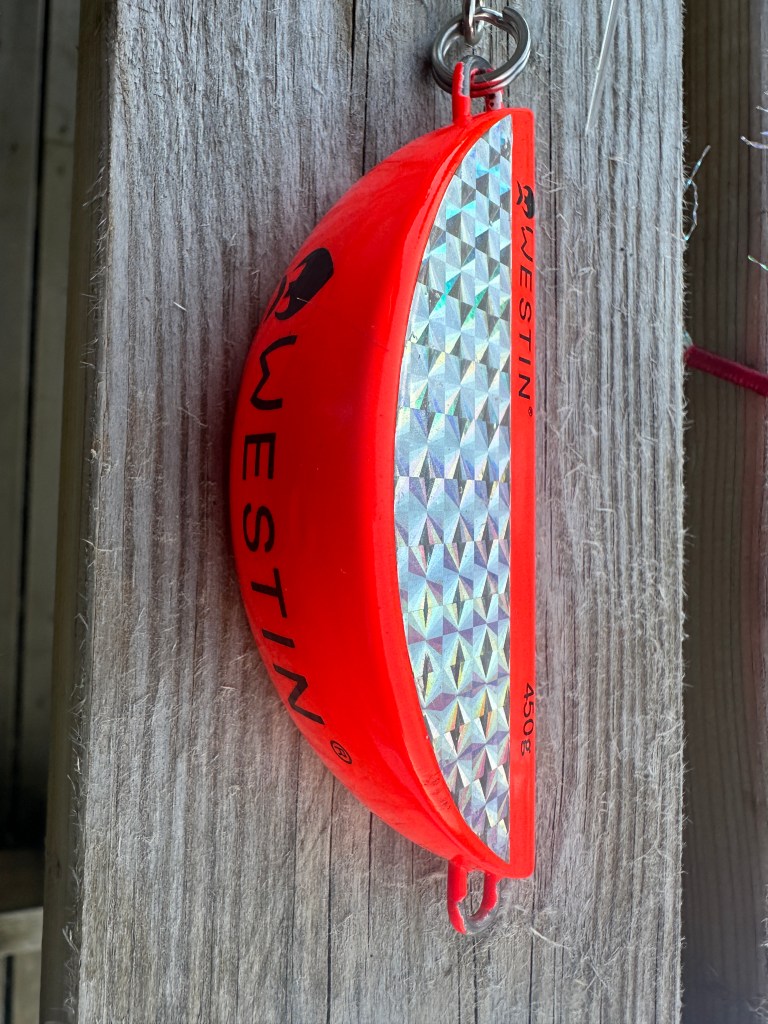
The first method was to simply drifting dead baits, using 450g Westin Anti-Twist leads . The main bait was dead coalfish in the 15-30cm range.
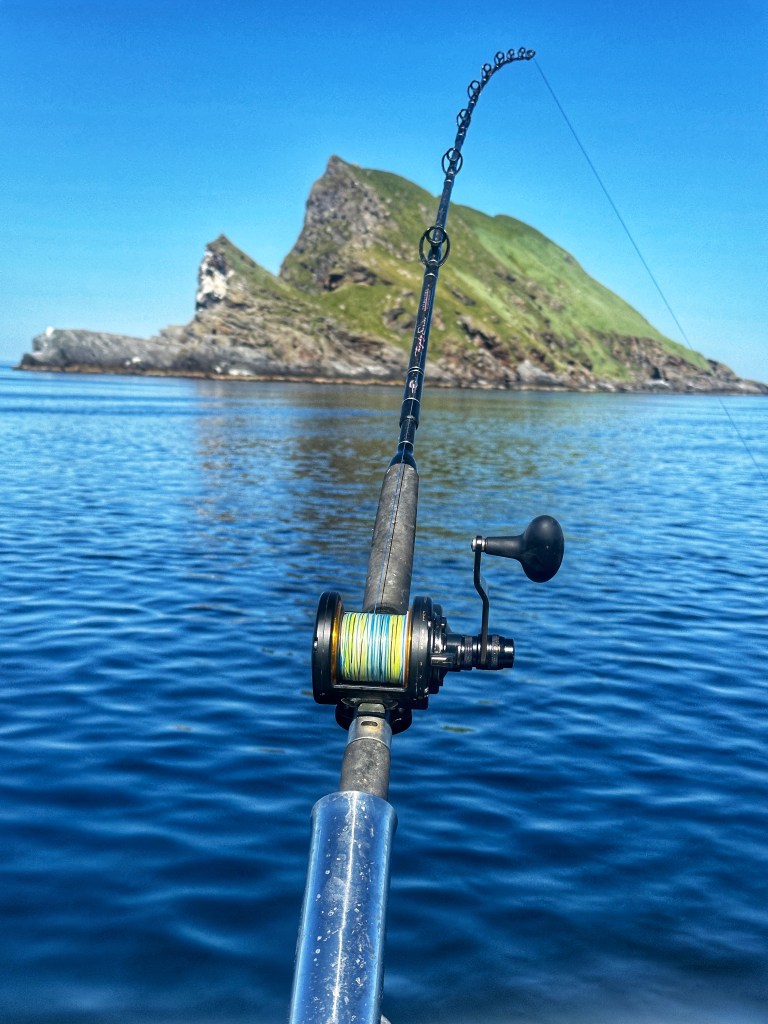
Rods were 30-50lb class boat rods with lever drag multipliers coupled with 80lb braid.
Hook links were approx. 1.5m in length, 100-150lb Mono or fluorocarbon, tied to Mustard Demon Heavy Circle 12/0 hooks. We upgraded all split rings to heavy duty ones.
The technique was to simply lip hook the dead bait. Secure it enough so it could not be easily pulled off the hook. Drop the bait to the bottom. Then reel up 5-10 turns. The key was working out the correct drift of the boat. This makes the bait travel over best underwater features. After a few drifts, it soon became obvious where the “strike zones” were.
The Garmin fish finders supplied with the boats help with this aspect. Having the Navionics Boating app on the iPhone also provides great assistance. It was vital to keep checking the depth on the sounder. Have one angler checking the sounder at all times, and calling out the changing depths. This ensures the bait remains off the bottom at all times.
Takes varied from small plucks, to full blown rod arching over. When using circle hooks, never strike. Simply allow the rod to bend into the fish. This will make sure the hook sets. A strike will almost certainly result in a lost fish.
The second technique was similar to the first, but a float is attached to the line. We used 300-450gram floats, fitted with clips to hold the rig at a set depth. Simply drop the bait to the bottom, pull the bait up to the correct depth, then secure with the clip. We fished the floats about 20-30m behind the boat. On a take, the clip would release, putting you in direct contact with the fish.
The third technique was the use of lures. This was particularly successful when the fish weren’t actively taking bait (especially around slack water). Lures were heavy 300-450g shads. These shads need to be actively worked. Constantly retrieving 10-20 turns of the reel and lowering back to the bottom. The speed of retrieve needs to impact enough motion in the paddle tail, especially if there is little tide run.
The other option (and my preferred method) is the 150g sandeel type lures. These would be cast and worked around the drifting boat. Cast the lure and let it hit the bottom. Then use fast turns of the reel to bring the lure up in the water. This style of fishing allows the lure to cover a lot of water. The hope is to get an instinctive take from the halibut, even if they are not on the feed.
For the casting lures, we used heavy spinning rods and fixed spool reels, loaded with 40-60lb braid.

Bait
There are large concentrations of coalfish close to the fishing camp. Marcus provided us several marks, that always had plenty of baitfish. Simple mackerel feathers were highly effective once shoals of small coalfish had been pinpointed on the sounder.
The Fishing
I had never fished Soroya before. I was amazed at not only the fishing but also the abundance of wildlife around the island.
We all listened to the guides advice with regard to fish locations and features to look out for. All the boats are offered on a self drive basis. Luckily, we had some experienced boat skippers in our group. That said, we all booked guiding days with Marcus. This really helped with fine tuning tackle, tactics, and of course, fish location.
The key to catching is being able to find the fish holding features. You must set the boat drift up to cover the right marks. I was lucky to have Dave and Darren on my boat. They had both fished Norway for many years. They knew the drill.
With such a large group (18 anglers/6 boats), it was easy to keep in touch. We used radios (which we brought with us) to find the areas and methods that were producing. We regularly shared information between the group, to ensure everyone had their share of fish.
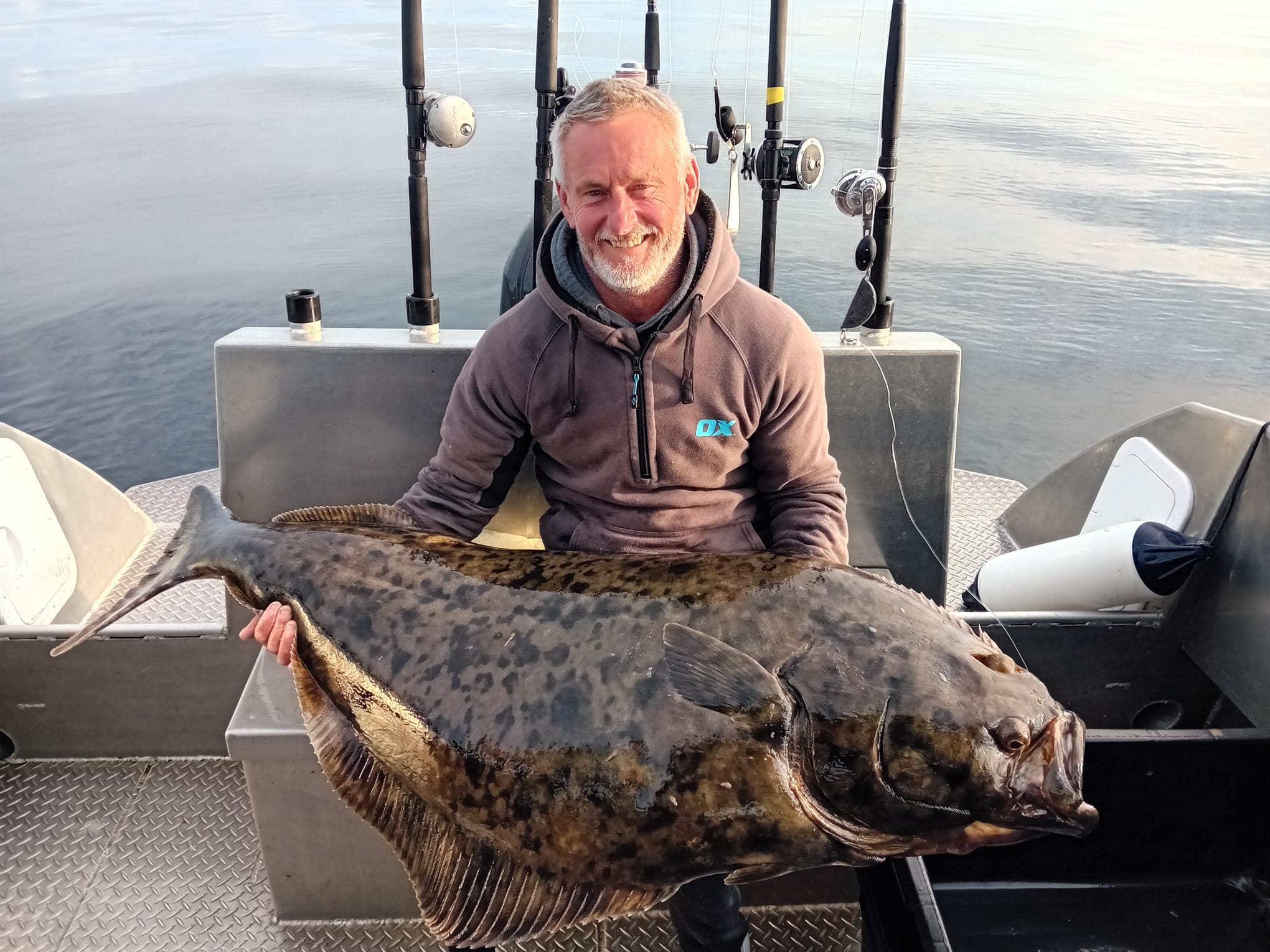
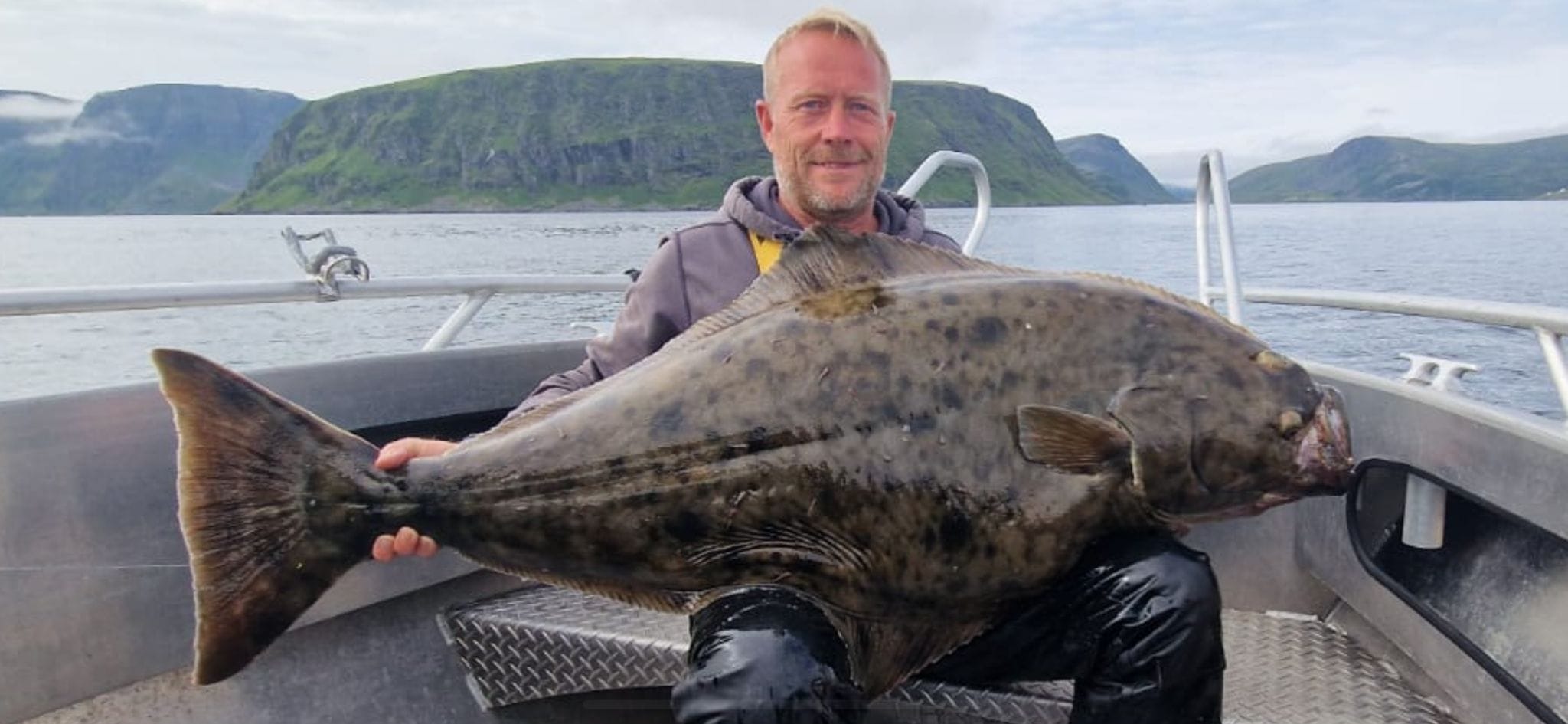
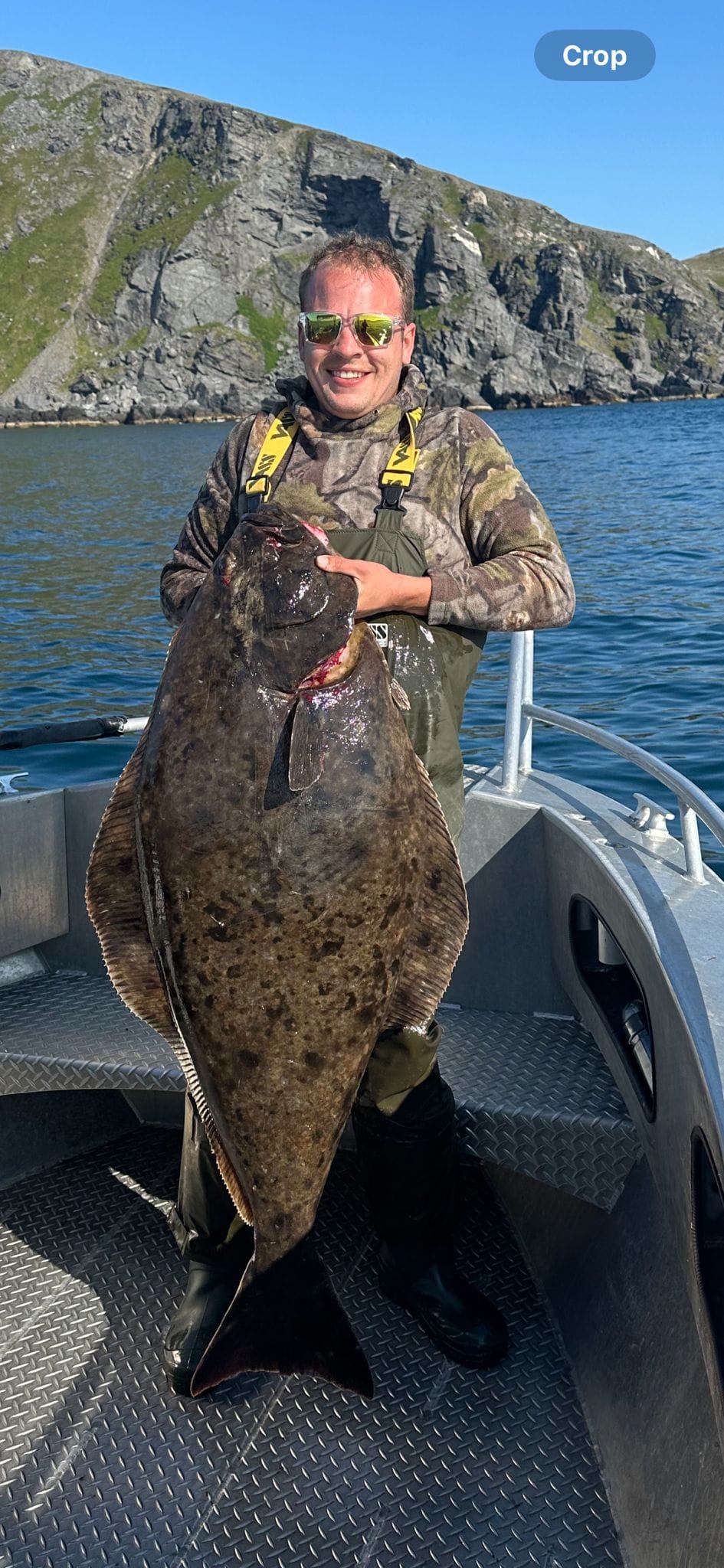
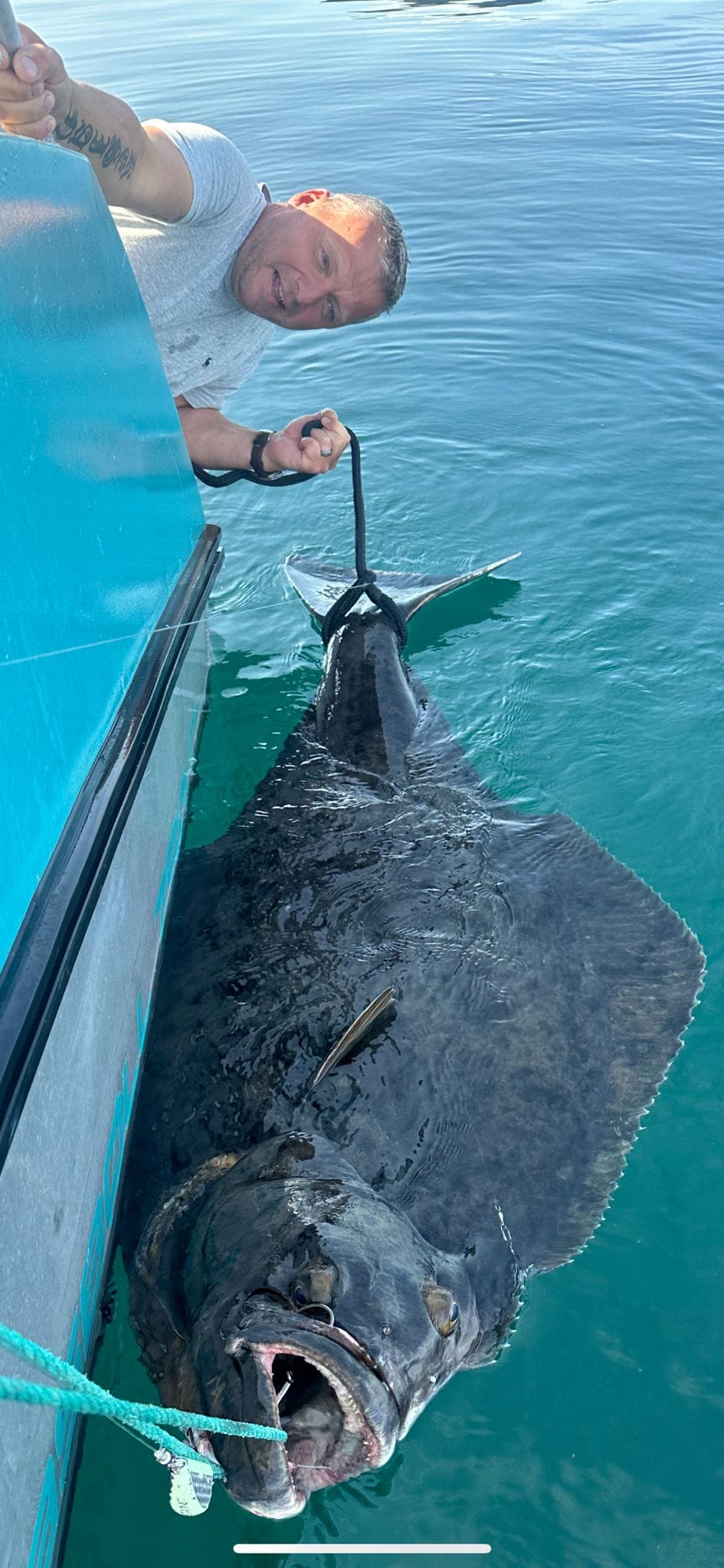
For the first few days we concentrated on bait fishing, using either the Westin leads or floats. Best fish of the week was a halibut of 2.1m caught by Matt. This fish took well over an hour to bring to the boat.
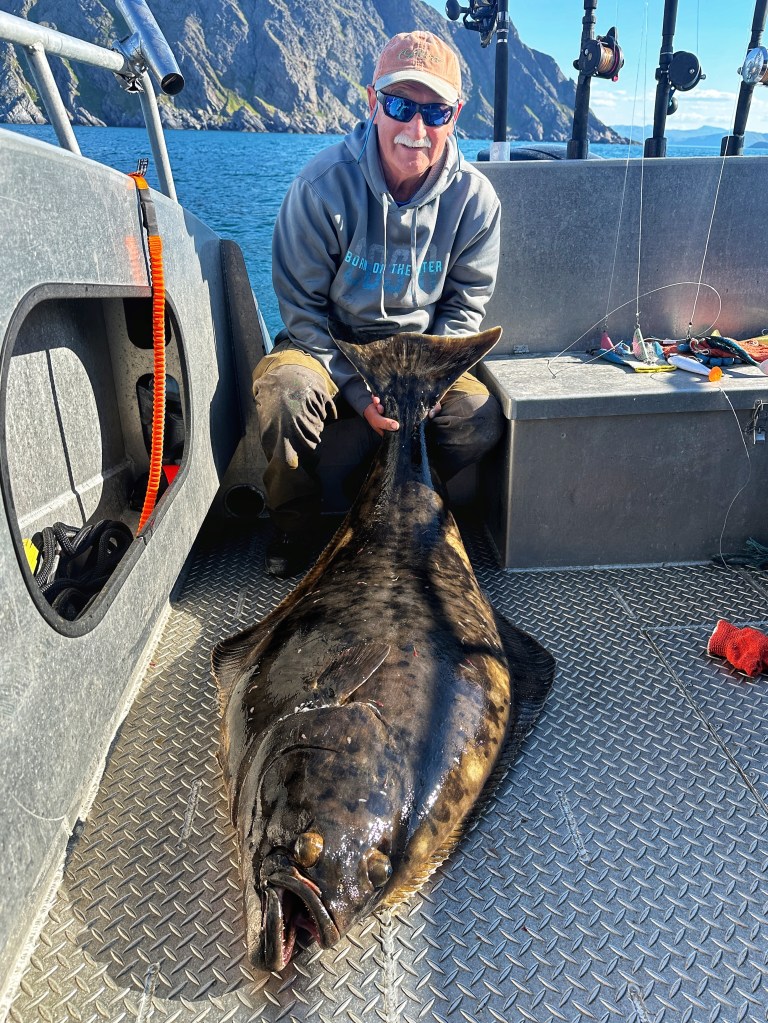
NB fish over 1.5m are not brought onto the boat deck. These larger fish are lip gaffed to get a rope on the bottom jaw. They then have a tail rope attached, so the fish can be measured/photographed before being released.

As the week progressed, we worked out something important. The vast majority of the halibut were being caught 1 hour either side of high tide.
Typical depths we fished were between 50-80m. With 24 hour daylight in July in Northern Norway, it was easy to fish both high tides. At 3am for example, the sun was still relatively high in the sky, giving full “daylight”. Outside of these peak times, we could often catch the halibut casting the 150g sandeels (Westin and Savage gear). These were fished in shallower areas, typically between 20-30m depths.
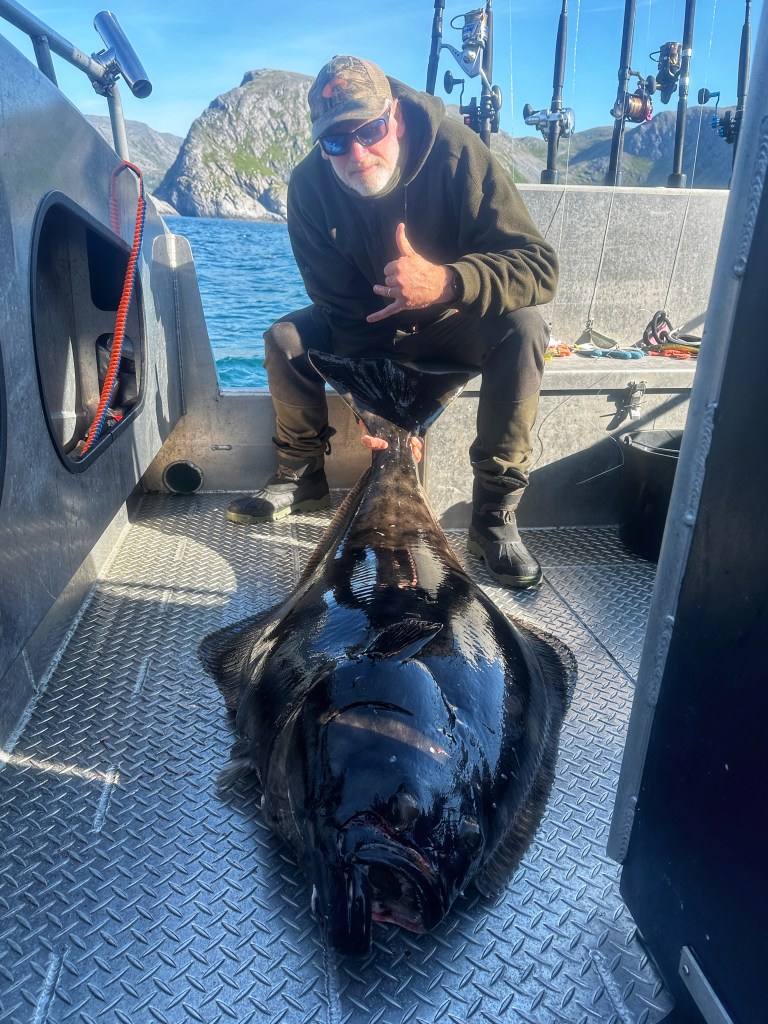
At the end of the week, we had landed over 60 halibut, with multiple fish over 1.5m in length.


Other Species
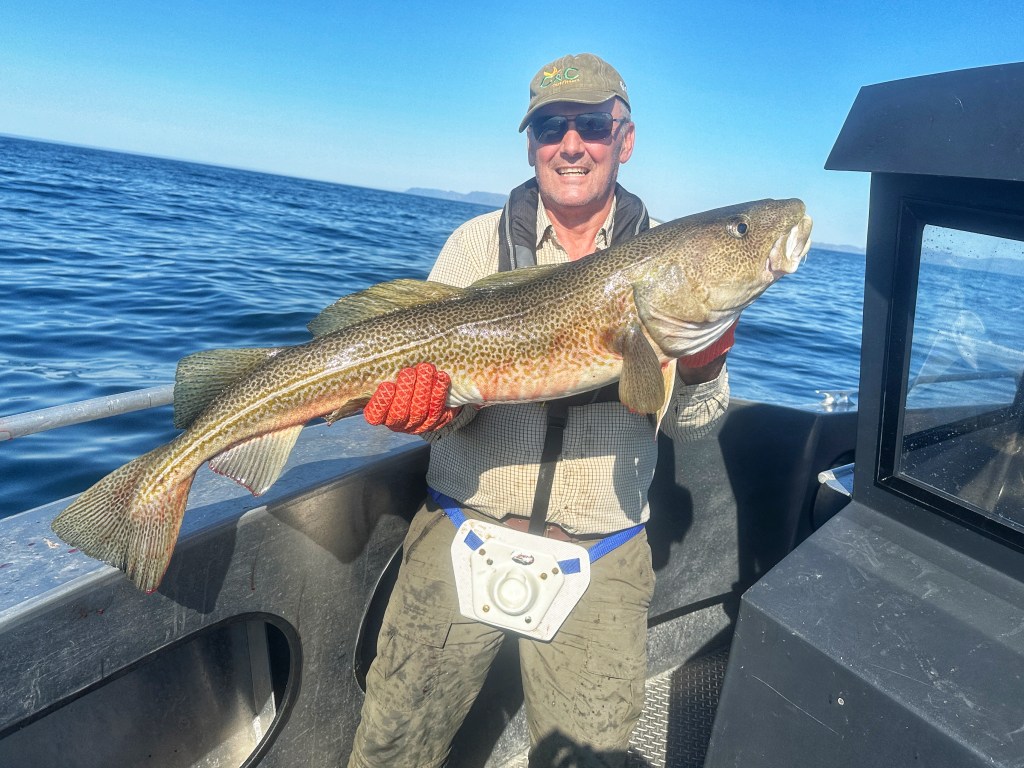
There are plenty of other fish to target off Soroya. Large cod and coalfish are prolific. We had multiple cod over 20lb, fishing the deeper marks (100-120m) with pirks.
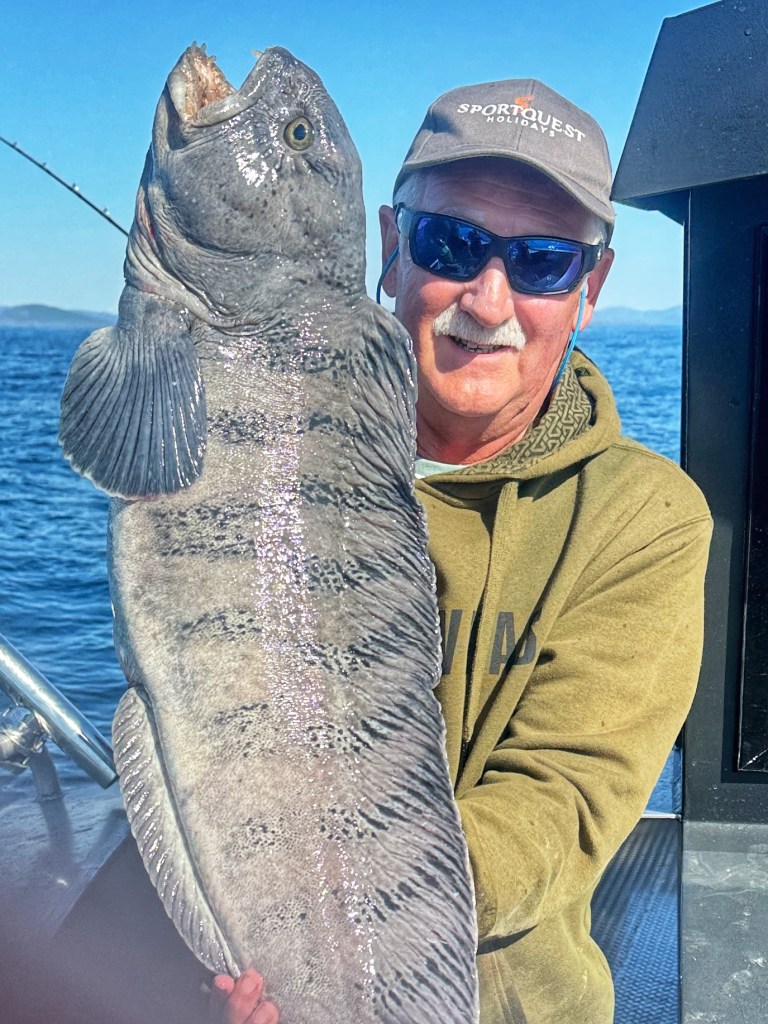
The iconic wolffish are present in large number. We had 2 wolf fish over 18lb.
At the right time of year plaice in excess of 3kg are a possibility. We did fish for them on the trip, but were unsuccessful on this occasion. We were advised August is one of the best months for the big plaice.
For fun, we had a species competition, and on our boat alone, we caught 11 different species during the week.
Wildlife
Soroya is a bird watchers paradise. We saw literally 1000’s of puffin/auks/razorbills, all feeding on the vast shoals of sandeel. The impressive white-tailed eagles were often flying over our boats. They readily swooped down to pick up any dead fish we threw into the sea.

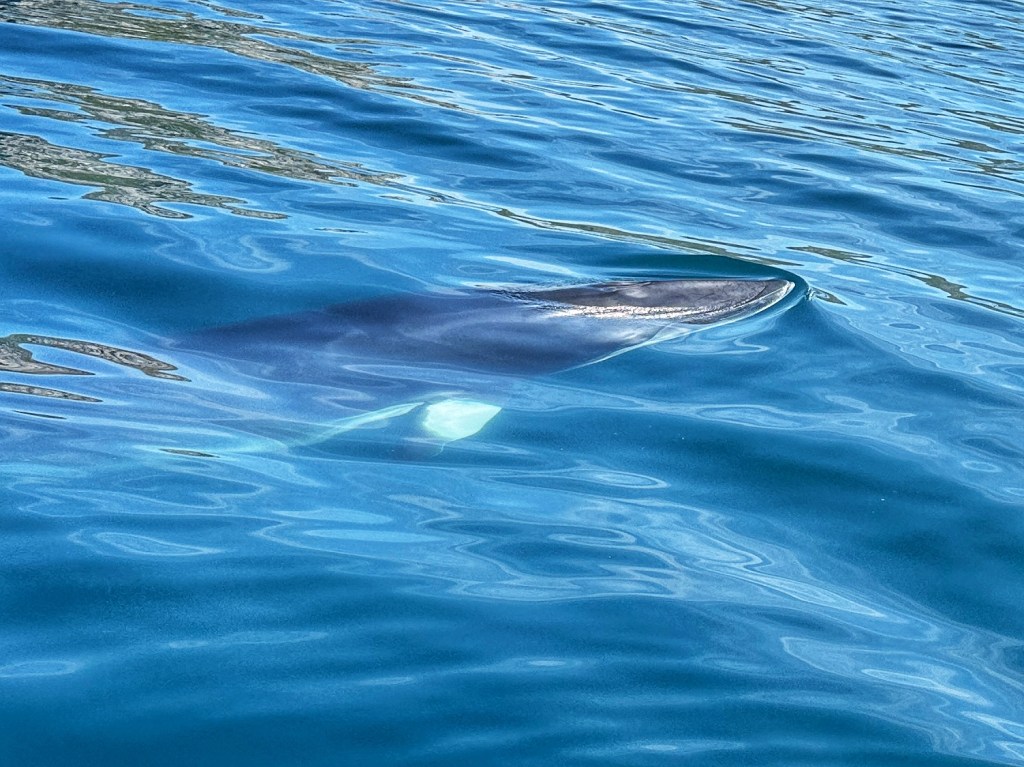
Whales and porpoises were seen daily, along with many seals. We had a particularly close encounter with a Minke Whale, which circled our boat multiple times
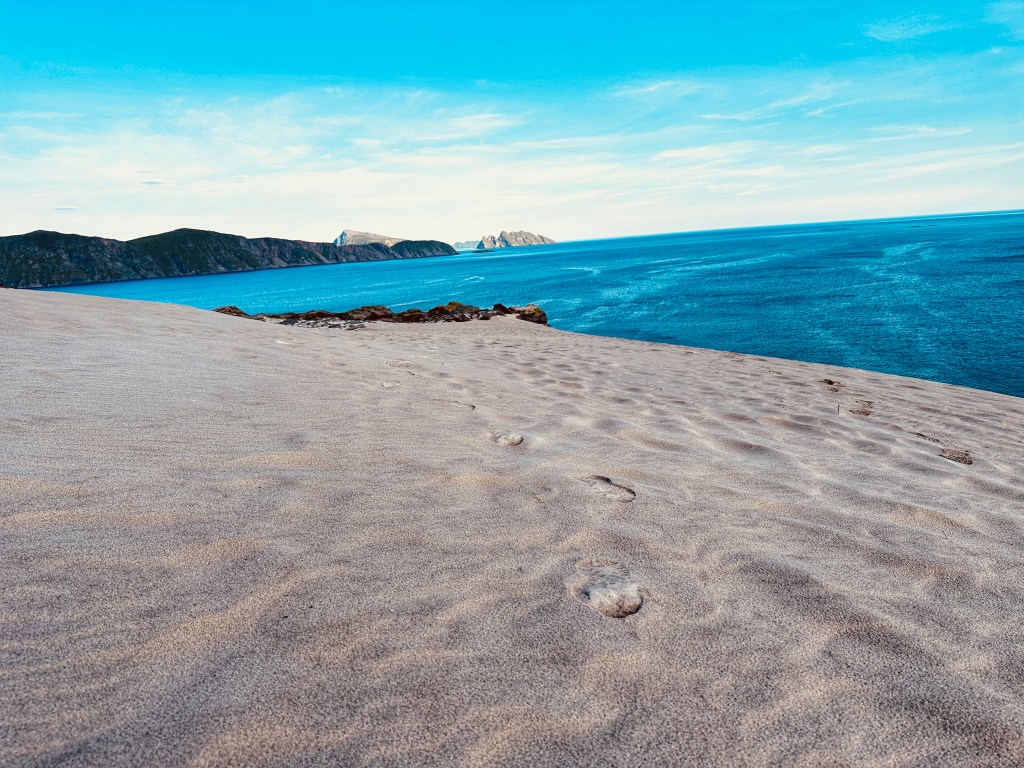
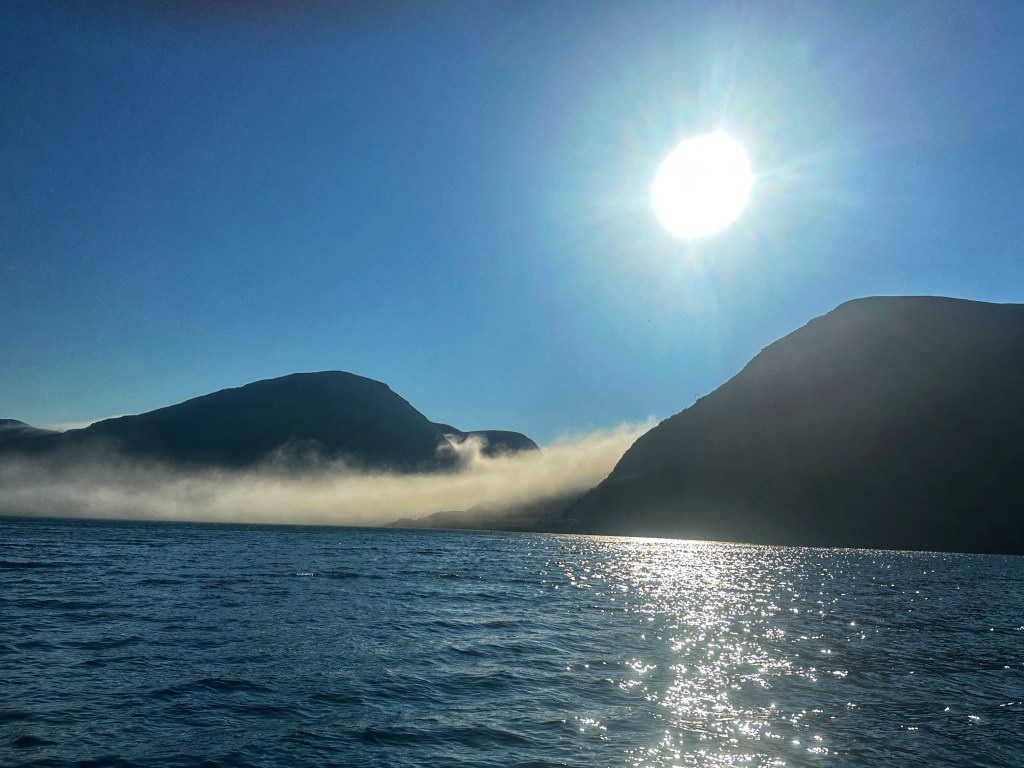
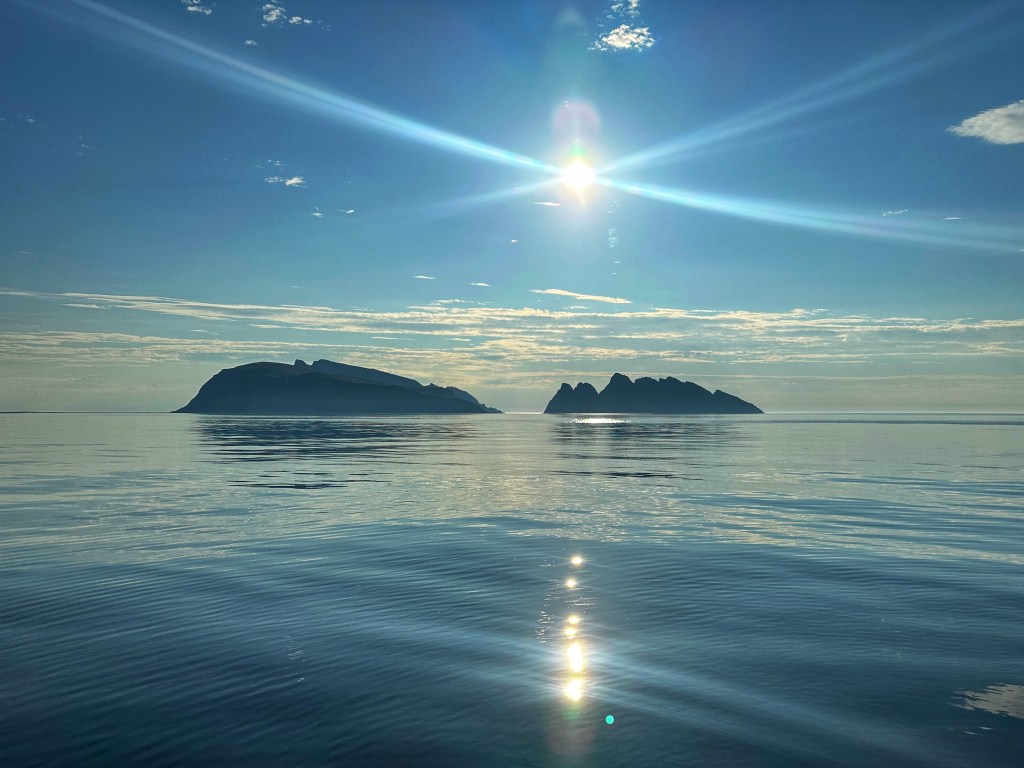
The island of Soroya has some spectacular scenery. Many smaller islands are dotted around the coast line. There are plenty of sandy bays to explore. Its a very sparsely populated island, popular with hikers from the mainland.
Summary
Soroya is still an unspoiled haven for sea anglers. During our trip in July 2024, we had incredible weather, with temperatures regularly in the low 20C’s during the day. The fishing exceeded everyone’s expectations. The camp was extremely comfortable and Marcus and Tina were great hosts. Suffice to say, we have already booked our return in 2025.

Links
Fishing Camp
https://www.dintur.no/Holiday-in-Norway/S%C3%B8r%C3%B8ya-Rorbu-og-Havfiske/
Tackle Supply/Advice :- Mick King at https://medwaytacklesupplies.co.uk/
Fish Limits
Anglers are limited to take 18Kg of filleted fish each out of the country. This rule is strictly adhered too. All halibut under 84cm and over 150cm must be released under camp rules. It is illegal for recreational anglers to sell Halibut.
Suggested Norway Check List
Rods
30-50lb Boat Rod for Large Shad Fishing/ Dead Baiting / Pirking.
Spinning Rod (capable of casting 150gram + Lures).
Lighter Boat Rod for Bait / Plaice Fishing etc.
Reels
Lever Drag Multiplier with at least 15kg drag.
Fixed Spool Reel with at least 15kg drag.
Braid
80lb for Multiplier 50lb for Spinning Reel.
100-150lb Mono for Leaders. Plus some lighter mono for Plaice rigs etc.
Lures
Shads – 300/400/500 gram Westin Crazy Daisy, Savage Gear 4D Herring Big Shad .etc.
Sandeel type for casting / spinning. Westin Sandy Andy, Savage Sandeel 150 gram etc.
Pirks
500 gram Norway stainless type for Cod Fishing.
200-300 gram for Bait / Plaice Fishing
Mackerel / Sabiki Feathers for bait fishing, plus Hokkai type for other general fishing.
Plaice Rigs – Norway type
Hooks
Good Circle Hooks for Halibut – Mustad Demon Heavy Circle Size 12/0 or BKK Monster.
Plaice Hooks – 1/0 – 3/0.
Stinger Hooks for Shads – Savage Gear Big Fish Kevlar Stingers.
Good treble hooks for Pirks.
Leads
Westin Anti Twist Rig Leads 450 gram.
Couple of standard leads
Heavy Duty Split Rings (200lb plus) mixed sizes.
Heavy Duty Swivels (200lb plus).
Heavy Duty Snap Links
Rubber Beads 8mm/10mm / Hard Beads for plaice etc.
Boat Bag (that fits in your suitcase).
Tackle Box / Lure Box / rig Wallet
Good pair Scissors / Braid Blades
Good pair Split Ring Pliers
Unhooking Pliers
Hook Sharpener
Filleting Knife
Rag / Towel
Super Glue
Waterproofs / Flotation Suit / Life Jacket
Waterproof Boots
Hat
Sunglasses
Gloves
Finger Stall
Butt Pad / Fighting Belt
Dega or Wiggler Halibut Float 300 or 500 gram.
Boat Rod Rest
Halibut Flying Gaff & Rope plus tail rope
Weighing scales
2 metre Folding Rule
Flask
Cold Box / Food.
Travel Plug / Charger
Apple Airtags
Travel Insurance.
Passport!
 Four Go Mad Adventures
Leave a comment