

My prostate cancer journey as represented in a game of football. The aim of this match report is to provide some insight into the disease and its treatment. Please note I have zero medical training, so please seek proper medical advice if you are impacted by Prostate Cancer.
Will I finally kick Prostate Cancer into touch ? Read on...
The BIG MATCH

The Big Match: Simon vs Prostate Cancer Kick Off February 2021 15:00
Venue: The Stadium of Life
Match commentary from the legendary John Motson aka “Motty”
The Teams
SIMON: No spring chicken, relatively fit, no known health issues, enjoys running and fishing, long time Chelsea Supporter (don’t hold that against him)
Support Team: The Gaffer – Urologist; Coaches – Prostate Cancer UK, NHS Staff, MacMillan Cancer Support; The 12th Man – WAGs, Family and Friends
PROSTATE CANCER: A nasty disease that impacts 1 in 8 men in the UK. For Black and Asian men, the figure rises to 1 in 4. Rarely gives itself away, symptoms can seem insignificant. Deadly in the box.
NICKNAME “The Silent Killer“
Support Team: Procrastination, Men’s reluctance to get tested, Lack of decent screening for men over 50, Inaccurate tests to detect the disease
The Pre-Match Build Up
I attended an annual health check-up in December 2020. As part of this health assessment, I had a PSA Blood test. The test can be used to give an “indication” if Prostate Cancer could be present. Its usually one of the first test a man might be given for Prostate Cancer. Generally, is first offered for men over the age of 50 (I was 57 at the time).
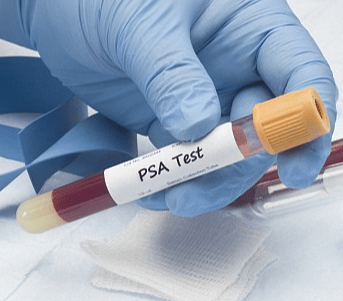
Programme Notes: – Prostate-Specific Antigen (PSA) a protein made only by the prostate gland. PSA can leak into your blood stream. Enlarged prostate, infection and/or cancer can increase the levels of PSA present in your blood stream. PSA tests do not provide a definitive answer as to whether or not Prostate Cancer is present. It can provide “false positives” and “false negatives”. For this reason, it is not widely offered to men as part of a national screening programme.
In the UK, if the result of the PSA test provides a reading above 3.0ng/ml, then this should be a red flag for the medical professionals to undertake more testing.
My PSA reading was 3.4ng/ml. As such, it was confirmed the match would take place, and I nervously made my way to the dressing room.
The Kick Off
My PSA test result was sent to my GP. They advised the reading was only just over the 3.0 “red flag” value, but to be sure there was no issue, arranged an MRI SCAN of my prostate. At this time the GP also connected me to the Urology Team based at St. Georges Hospital, London.
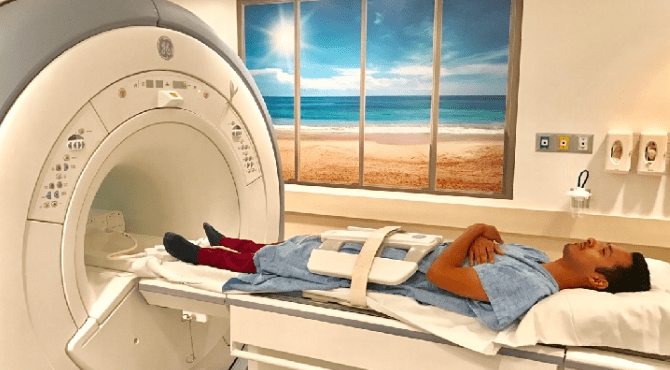
Programme Notes: An MRI (magnetic resonance imaging) scan uses magnets to create a detailed picture of your prostate and the surrounding tissues.
During an MRI scan, you lie in a large cylindrical device for approximately 30 minutes. The device uses spinning magnets to create a 3-D image of the prostate. Due to the noise of the device, you are provided headphones and a choice of music to listen to. I remember listening to Bob Marley, “Don’t Worry About a Thing“.
A few days later I was called by a member of the Urology team. He advised an area of concern was seen on the scan. This was given a PI-RADS (Prostate Imaging – Reporting and Data System) score of 4.
He explained this meant there was a “high likelihood” that cancer was present.
Programme Notes: The PI-RADS scale runs from 1 to 5, where 1 indicates normal Prostate structure, up to 5, which would indicate a high degree of risk of cancer.

15 Mins PENALTY – Prostate Cancer !!
Motty “Simon is definitely on the backfoot here“
With the results of the MRI scan, the next step was to move into intrusive testing. I was asked if I would agree to undergoing a Transperineal (TP) Biopsy.
Of course, I had a game to win. I was willing to take one for the team.
Programme Notes: The TP-biopsy is undertaken in an operating theatre, using local anaesthetic. A grid based system is used to take small samples from the prostate, using thin needles via the perineum (the area between you bum and your balls). The aim is to sample multiple parts of the prostate and analyse any cancer cells found. The cancer cells are categorised as either “slow growing” or “moderate growth rate”. The ratio of “slow” to “moderate” growth cancer cells are defined into a GLEASON SCALE.
After an anxious week waiting, the results of the biopsy were in.
“Simon you have LOCALISED Stage 2 Prostate Cancer“
“Your Gleason Score is 7 (3+4)“
It took several minutes for the words “You have cancer” to fully sink in !

18 mins GOAL ! Simon 0 v Prostate Cancer 1
Motty “No time for Simon to panic, it’s still early doors“
Programme Notes: Localised Prostate Cancer indicates that all the cancer is confined within the prostate. It has not spread outside the prostate, so at this point there is no imminent danger
The Initial Response
After delivering the news, I was provided the list of options available to me. Each option was provided with the respective Pro’s and Con’s. The urologist would not provide a recommendation, as to which option he thought was most suitable for me. When I pushed for his opinion, he simply repeated the options and advised me that only I could make the decision, based on the facts provided. I was not happy that an expert in the field of Prostate Cancer would not give me their opinion. In my frustration, coupled with the shock of the diagnosis, I may have used a few rude words !
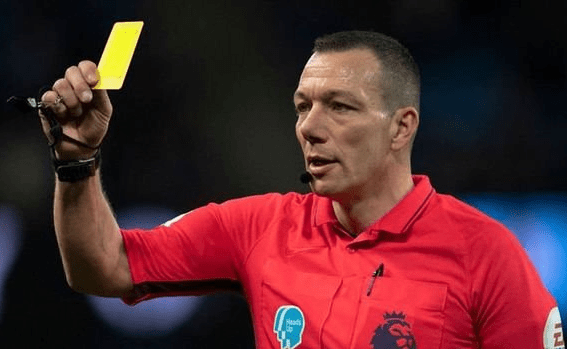
20 mins Yellow Card; Simon – Dissent
Motty “Simon needs his support team to calm him down, or he might see Red“
The Research
With the booklet I was provided from Prostate Cancer UK, and lots of internet searches, I began to research the options that I had been provided.
Option 1 Active surveillance | Prostate Cancer UK – Take no actions apart from regular monitoring for any increase in cancer growth
Option 2 Permanent Seed Brachytherapy – A type of radiotherapy where tiny radioactive seeds are permanently put into the prostate
Option 3 Radical Prostatectomy – Surgery to remove the whole of the Prostate
At the time I wasn’t keen on any of the options provided (who would be). One of the Google searches came up with another option; High-intensity focused ultrasound (HIFU). HIFU wasn’t available via my NHS trust, but I was able to have the treatment under my private medical insurance. I met with the medical company that provided the treatment and they advised I was a good candidate for the treatment. The key selling points to me were; limited invasive treatment, quick recovery times, in and out of hospital in a day, low risk of side effects (in hindsight I should have used the old adage “if it sounds too good to be true….”)

25 Mins Simon is launching a stream of attacks down that right wing
Motty “Looks like doing his homework on the opponent is starting to pay off for Simon“
Programme Notes: High-intensity focused ultrasound (HIFU) uses high-frequency ultrasound energy to heat and destroy cancer cells in the prostate
The Fight Back
I arranged the HIFU treatment via my medical insurance. The treatment was carried out under general anaesthetic. The procedure lasted approximately 45 mins. When I awoke from the surgery, I had a urinary catheter installed. I felt a little sick from the anaesthetic, but apart from that I was fine.
The surgeon confirmed the HIFU treatment had gone well and he believed the areas of cancer seen on the MRI scans, had been well targeted by the Ultrasound. I was sent home and asked to return in a week to have the catheter removed.
30 Mins GOAL ! Simon 1 v Prostate Cancer 1
Motty “Back of the Net !!!“
The Pain
One week later I was back at the hospital, eager to have the catheter removed. It was starting to become quite painful, like a medieval torture treatment. The catheter was removed very quickly without any pain. I was advised I could return home “as soon as I pee“. I tried to wee but struggled to pass more than a few drips.
Eager to get home, I told the nurse a little white lie, advising I was in “full flow”.
When I arrived home, I drank plenty of fluids as instructed. I felt the urgency to have a pee, but there appeared to be a blockage ! 2 hours later and I was doubled up in agony. Imagine drinking 5 pints of lager and someone tying a knot in it, that’s how it felt.

35 Mins Direct Free Kick to Prostate Cancer
Motty “Simon’s gone down on the half way line, looks like he could do with the magic sponge”
My wife rang the hospital, they told her to get me to the nearest A&E department ASAP ! Despite being very busy, the triage nurse took immediate action. She said I needed to pass urine immediately or my bladder could burst. I was rushed into a cubicle, and another catheter was quickly inserted, instantaneously draining my bladder, and reliving the excruciating pain.
Motty “Simon is back up on his feet, but he still looks a little groggy“
The Recovery
Recovery from the HIFU treatment was not as straightforward as I had been lead to believe. I had to suffer the catheter for further 2 weeks.
Quite apart from the bladder retention issues, I later developed severe stomach pains and Urinary Tract Infection (UTI). A course of antibiotics eventually resolved the UTI issues. I had a camera inserted in me, where I didn’t think a camera could go ! I subsequently had a CT scan that revealed I also had 2 hernias. I’m not sure if the treatment contributed to the hernias, but I never experienced the abdominal pain prior to the HIFU.
After about 5 months, most of the abdominal pains had greatly reduced. My follow up PSA test gave a reading of 1.1, giving me hope the cancer had been successfully treated.

45 mins HT Simon 1 v Prostate Cancer 1
Motty “A pulsating 1st half, its difficult to separate the two teams“
The Fund Raising
Having had a reprieve, I was keen not only to spread the word about Prostate Cancer, but also raise funds for Prostate Cancer UK. I ran 15 events throughout 2022, and was delighted to raise over £4500 for the charity. The highlight was running the London Marathon, dressed in a full Darth Vader Costume.
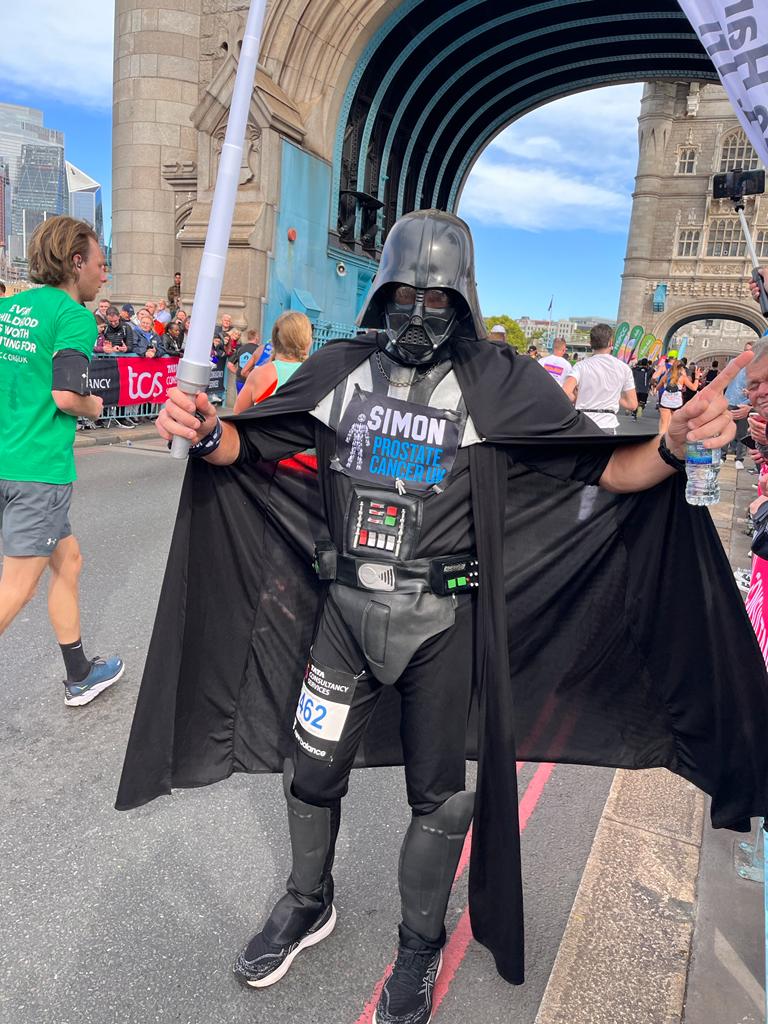
The money raised, would be well spent, finding better ways to fight Prostate Cancer and support those impacted.
55 Mins GOAL ! Simon 2 v Prostate Cancer 1
Motty “Simon is using what he has learned in training, to pile further pressure on Prostate Cancer”
The Relapse
My private medical insurance had become too expensive for me. I was passed back into the hands of the excellent NHS team at St. Georges. They put me on Active Surveillance, which involved scheduled 6 monthly PSA tests, and annual MRI scans.
Over the period of 18 months, my PSA rose from 1.1 to 2.9. Then my annual MRI scan showed a new area of concern, rating PI-RADS 5. I knew what was coming next, a second TP-Biopsy was quickly arranged.
So more needles pierced my nether regions, and I was not overly surprised with what the result would be. The news I was dreading, Prostate Cancer was defiantly back in the game. Two years after my initial HIFU treatment, I was told the cancer had returned.
70 mins GOAL ! Simon 2 v Prostate Cancer 2
Motty “Prostate Cancer has battled hard in the second half and took their chances well to equalise. All is set for a Grandstand finish”
The Choices
By now I had a very good knowledge of Prostate Cancer, and the various treatment options. I was again offered 3 course of actions, but was warned the previous HIFU treatment had made significant structural changes to my Prostate, which might impact successful outcomes.
My revised options were as follows:-
Active surveillance | Prostate Cancer UK – Take no actions apart from regular monitoring for any increase in cancer growth
Radiotherapy with Hormone treatment – External beam radiotherapy uses high-energy X-ray beams targeted at the prostate from outside the body
Radical Prostatectomy – Surgery to remove the whole of the Prostate
The Decision
Simply going into another period of active monitoring did not appeal. It’s true Prostate Cancer, unlike most others cancers, is a slow growing disease. I could have deferred invasive treatment and continued to just monitor any advances in the cancer. But I wanted it out of my body ASAP. This was more from a phycological standpoint, rather than based on the well documented epidemiology that exists with this cancer.
Programme Notes: Prostate Cancer is generally a slow growing cancer. It has be shown in a number of research programmes, that the presence of cancer in the prostate does not always lead to serious outcomes. Its important to weigh up the invasive nature of most prostate cancer treatments, and their associated side effects, against the risk of the disease impacting life expectancy
I had previously researched Radiotherapy. The treatment would involve multiple visits to hospital over the period of a month, and there was a chance the treatment could result in damage to the bowels. The accompanying hormone treatment (basically reduces testosterone) could also have multiple undesirable side effects.
I’d already made my mind up to go with removal surgery before the meeting. Being relatively fit and healthy, I knew I could manage the surgery, and it would hopefully break to cycle of fix/relapse.
The Risks
The possible negative outcomes of surgery were clearly explained to me. The main two impacts of prostate removal surgery are Erectile Disfunction (ED) and Urinary Incontinence (UI). Both of these are very real possibilities.
Obviously, your ability to father any more children are ruled out after this surgery. My daughter said she “didn’t want the inheritance pot diluted any further“, so I reluctantly declined the kind offer to leave a deposit in the sperm bank (I was genuinely offered this).
The process of removing the prostate has the ability to damage the nerves that allow a man “to get it up“. New methods adopt “nerve sparring” techniques, to reduce the likelihood of long-term ED.
Removing the prostate impacts both the bladder and ureter. It also interferes with the sphincter values, that control the start/stop of peeing. I was advised “leakage” was highly probable, but with regular pelvic floor exercises, this is normally overcome in the 3-6 month timeframe.
Prior to the surgery, I installed the NHS Squeezy App on my mobile phone, and followed the guided, timed exercises to strengthen my pelvic floor. This would be a key part in a quick recovery of my pee control.
The Robot

3 weeks after the biopsy results, I was once again on the operating table. I was feeling “relatively” calm. I had huge respect and faith in my surgeon and his supporting team. They had performed many prostate removal procedures and had a great track record of delivering successful outcomes for men.
The surgeon performed Robot-Assisted Laparoscopic Radical Prostatectomy.
Radical refers to the complete removal. Laparoscopic (Keyhole) surgery was used, and involved 6 x 1-3 cm incisions in the abdomen. The surgery was performed with the aid of a Da Vinci Robot. The robot assists the surgeon make very precise incisions, and further aids the procedure by magnifying and creating 3-D imaging of the area being operated on.
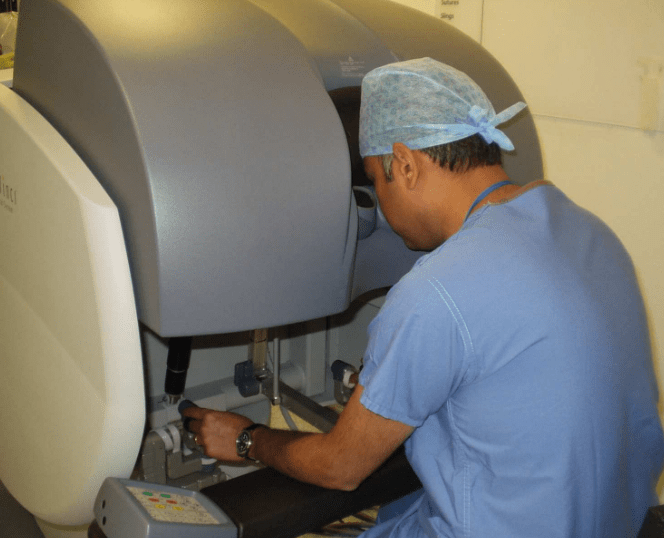
80 Mins SUBSTITUTION (Da Vinci)
Motty: “A well timed substitution for Simon, as Robot comes on for his first appearance for the club”
The Surgery
The surgery lasted approximately 3 hours. When I finally came round I was able to speak to my surgeon. He confirmed the surgery had been a success, but advised the previous HIFU treatment had meant the desired “nerve sparring” had not been possible. The HIFU had “fused” my nerves to the prostate, so they couldn’t be saved. He was however very confident that any “leakage” issue should be minimal, based on his specialised treatment techniques.
The Recovery
Like my previous treatments I was again catheterised. I was able to leave hospital the following day. I was a little tender in the “undercarriage department“, but able to walk out the hospital unaided. I was back walking the dog the very next day, and made the effort to do so daily from that point. Sure, I was feeling sore, but I know how important it is to keep moving after any injury/trauma to the body. I go with the old adage “motion is lotion“. Getting out each day was also good for my mental health. My cocker spaniel wasn’t go to let me sit on the sofa all day anyway, so I didn’t really have a choice in the matter !
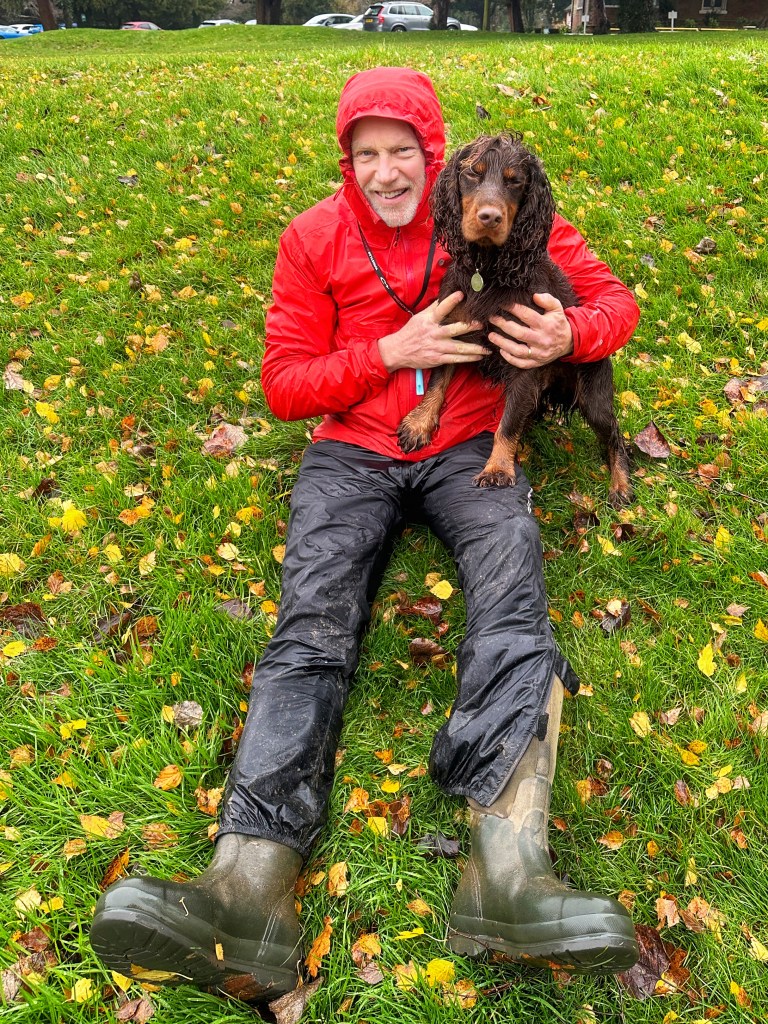
A district nurse came to my house after 10 days and removed the catheter. I was relieved (literally) when I was able to pee without any issues. I had a supply of male pads, and wore these for about 2 weeks. There was a small amount of “leakage” but these were minor. After 2 weeks of using Squeezy I no longer needed the pads, the predicted 3-6 months of mild incontinence, had been reduced to 2 weeks.
I was back fishing the the following week. It felt strange to have a rigid rod in my hand again (Oh come on, I’m allowed a knob gag aren’t I ?)
There followed about 6 weeks of abdominal and perineum pain. After this time I was able to resume light exercise. I went back to my Friday morning boot camp sessions and was able to resume slow 5 Km runs.
I was the asked to get a further PSA test done 6 weeks after the surgery.
Programme Notes: Post prostate removal, the PSA value should be close to zero. If any cancer is still present this would normally give a positive PSA value.
And then I was back at St. Georges for my Post-Op review with the surgeon. We discussed the ED and UI situation. I told the surgeon how the post surgery recovery had been so much easier than I had imagined.
And then the news I wanted to hear; “Your PSA level is virtually undetectable”
Motty: “Prostate Cancer appears to be dead and buried !!!“
85 Mins GOAL ! Simon 3 v Prostate Cancer 2
Motty “An absolute screamer from Simon, a pile driver of a shot, the ball hit the top right corner with real ferocity. The keeper had no chance. With time running out Prostate Cancer are down on their knees, they look totally defeated”
The Final Whistle

90 (+5) mins FINAL SCORE: SIMON 3 v PROSATE CANCER 2
The Post Match Review
As part of the removal surgery process, my prostate was taken away for analysis in the lab. The subsequent report showed my cancer was much more prevalent than the MRI scan and biopsy had previously indicated. It was close to breaching the prostate and entering other parts of my body. It was now assessed as being at Stage 3A. This news backed up my decision to have the surgery.
Although it is unlikely that Prostate Cancer will make a comeback, it is possible. I am now back on Active Surveillance, with PSA tests scheduled at regular intervals for the next 2 years.
The Post Match Interview
Motty: “So Simon, how do you feel the game went”
Simon: “Firstly I’d like to start by thanking everyone who helped me win this match. It really was a life or death game for me. I had so much help from many people who contributed to this win.
To the Gaffer who performed the surgery and the rest of the Urology team at NHS St. Georges.
Thanks also to Prostate Cancer UK for all the excellent advice they provided throughout the match. Their words of wisdom from the dug out, proved decisive.
And lastly to all my family and friends who supported me from the terraces throughout the match. Their support and constant signing, really was a lift, and kept me in the match”
Motty: “There appeared to be a lot of bad blood out there today, was very reminiscent of a Chelsea v Leeds game from the 1970’s. How you feeling after such a gruelling encounter ?”
Simon: “Yes it was a tough game and I’ve got a few scars. Part of my body is feeling a little deflated, but apart from that, I’m feeling really good“
Motty: “I am hearing talks there maybe a re-match, what are your thoughts on that ?”
Simon: “Not going to happen Motty, Prostate Cancer you had your chance, now FUCK OFF“
ALL MEN OVER 50 – PLEASE SPEAK TO YOU GP TODAY ABOUT GETTING TESTED FOR PROSTATE CANCER. DON’T STALL, OR PROCRASTINATE, MAKE THAT APPOINTMENT NOW !
The Links
I am running 7 Ultra Marathons in 2024 to raise funds for Prostate Cancer UK. If you would like details and/or donate please click link below

Simon Best is fundraising for PROSTATE CANCER UK (justgiving.com)




 Four Go Mad Adventures
Leave a reply to Chris G Cancel reply